
From Print to AI: Why Structured Product Data Still Wins
The 90s: When Product Data Meant Print
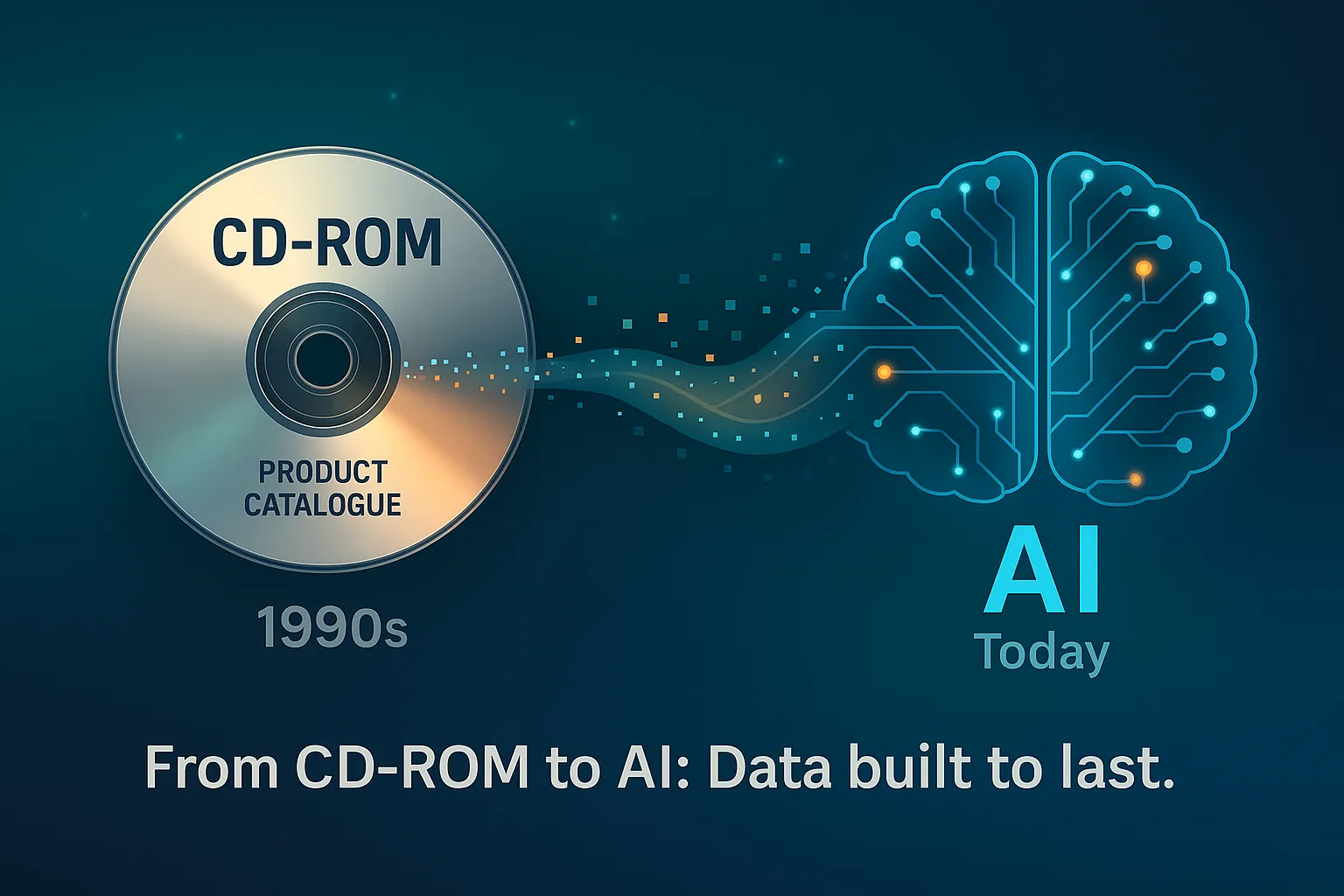
In the 1990s, product data had one main purpose: To look good on paper.
Catalogues were the lifeblood of retail and wholesale, and every system - including the early predecessors of STEP - was built to output print pages. Data was often packed with media-specific tags, manual line breaks, and layout “hacks” just to make the catalogue look right.
It worked - but it also tied product data to a single channel.
The First Shift: CD-ROMs and the Internet
When CD-ROMs and, shortly after, the Internet arrived, the game changed. Suddenly, product data had to move beyond print.
But reusing data was a nightmare. Teams had to strip away formatting before product information could be published in a new channel. What once looked clever on paper became a liability.
That’s when Stibo Systems made a crucial move. They began designing STEP to be:
- Media-neutral: no embedded formatting that tied content to a single channel
- Output-agnostic: information stored as clean, reusable attributes and values
- Scalable: flexible enough to support new channels as they emerged
In other words, data was broken down into its smallest components - validated, reusable, and ready to be reassembled in any shape or form.
The result? STEP wasn’t just a catalogue publishing system anymore. It became a true Product Information Management platform and later a Master Data Management platform.
The Second Shift: AI on the Horizon
Fast-forward to today, and we’re facing another wave of change: AI.
Here’s the remarkable part: Organizations that implemented STEP ten years ago - using its channel-neutral, component-based approach - are already better positioned to leverage AI today.
- Poorly structured, channel-bound data limits what AI can do
- Clean, granular, channel-neutral data multiplies AI’s potential
The decisions made in the early 2000s are still paying dividends in 2025.
How We Help Customers Prepare for the Future
At Unit of Measure, our work as a Stibo Systems implementation partner is about ensuring STEP delivers on its full promise - both today and tomorrow.
We help organizations:
- Best practice implemention of the STEP platform
- Assess their current STEP setup and identify gaps in data structure and governance
- Refactor data models to ensure media-neutral, AI-ready structures
- Design workflows that streamline business processes seamlessly, automate tasks and shorten time-to-market
- Apply business rules that keep data validated, clean, and consistent across channels
By building on STEP’s foundations, we make sure our customers aren’t just keeping up with change - they’re ready for the shifts no one can predict.
Final Thoughts
From print to CD-ROM, from the Internet to AI - one principle has stood the test of time:
Build for adaptability, and your data will never go out of style.
That’s why we continue to help STEP customers shape their product data strategies. Because the story of STEP isn’t just about the past - it’s about building resilience for the future.